
In my previous post, I covered that the attorney general of the European Court of Justice believes the balance between copyrights and the freedom of the arts to be manifestly wrong – at least for “producers of phonograms, films and broadcasts”. This begs the question: How do we fix it?
I want to give it a shot. To give some context, I’ll include a short analysis of the current situation. You may skip towards the solutions if you already are a copyright expert.
- Purpose of copyright law
- What happens without a copyright
- Where copyright goes against its purpose
- How to make copyright law fit its stated purpose
- AI
- The effects of my proposal
- Further reading
Purpose of copyright law
EU copyright law consists of a range of directives and regulations harmonising essential rights, guaranteeing the protection needed to encourage creativity and stimulate investment in the sector. The aim is to promote cultural diversity and better access for consumers and businesses to digital content and services across Europe. Copyrighting uses licensing as its main mechanism, most often granted directly by the rights-holder or a rights management organisation.
So, we have 4 purposes for copyright to achieve:
- We need to encourage creativity. This is done by giving certain legal protections (ie, copyrights) to creators (copyright calls them “authors”), letting them have an exclusive economic right (the copyright) to financially exploit (profit from) what it is they’re making (the “work”).
- We need to stimulate investment. This is currently done by letting the creator sell (“license”) their copyrights exclusively to a publisher, who then can market the work.
- We need to promote cultural diversity. This is a goal, whether the current copyright law fulfills this remains unclear.
- We need to improve access to culture. This means reducing geoblocking (a thing the EU has been regulating away) and ensuring that people have an easy time getting access to the works.
This is mirrored in the US constitution (“to promote the Progress of Science and the useful Arts, by securing for limited Times to Authors and Inventors the exclusive Right to their respective Writings and Discoveries“) and the WIPO’s position (“Copyright law aims to balance the interests of those who create content, with the public interest in having the widest possible access to that content.“)
We also have the fundamental freedoms granted in Article 13 of the EU charter:
The arts and scientific research shall be free of constraint.
Copyright law, by definition, constraints these freedoms. However, the benefits of having a copyright law benefits the arts probably more than not having it.
What happens without a copyright
Copying is always easier than creating. If copying is unrestrained, the people who get rich off creative works aren’t the creators, but rather whoever can figure out to copy and market their stuff the most effective. This was a massive problem ever since the printing press, and lead to the creation of the Berne convention.
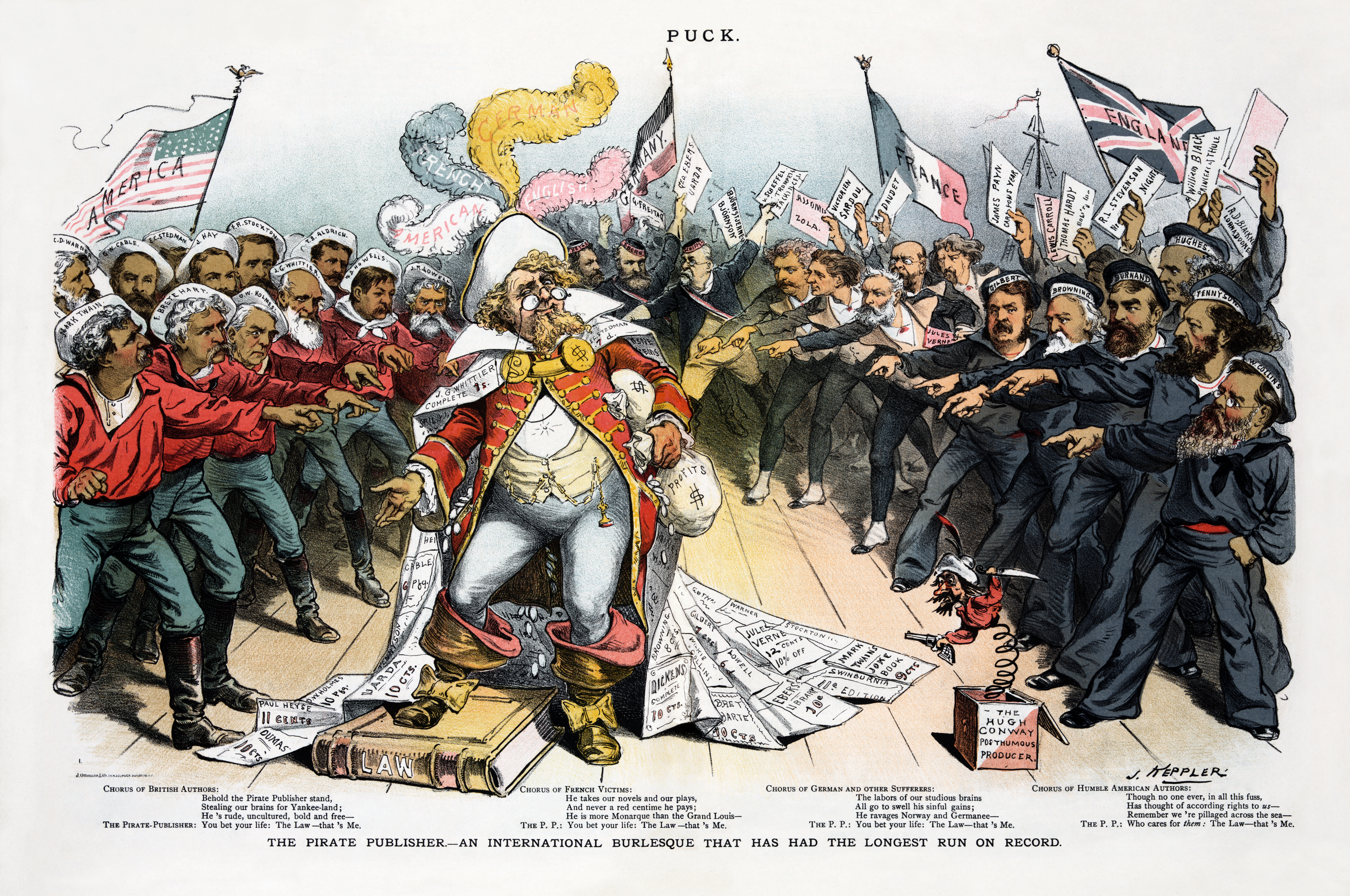
To translate this into modern terms, it’s like a “best of” YouTube or tiktok channel taking the best content they can find online and just reuploading it to their own channel, and monetizing the ever-living daylights out of that. It’s something that should strike anyone who ever has done something creatively as fundamentally unfair. Hence why we’ve got copyrights.
Where copyright goes against its purpose
Since its inception, copyright has massively tightened down on what is and isn’t allowed. You can read about the History of copyright for a more detailed rundown. Here, I’ll analyze specifically in which ways current copyright runs afoul of its purpose. I am including related rights in this analysis but will refer to them as “copyrights” anyway – they’re technically different with different protection terms associated with them, but practically serve the same purposes outlined above.
Copyright discourages creativity
Copyright, as exists currently, discourages entire genres of creativity, especially in the field of music. Sampling, bootlegs, remixes and such are important forms of creative expressions, and they’re strongly limited (see the Metall auf Metall case featured in my previous blogpost for more). Using even tiniest bits of existing materials – a single line of text, a single frame from a movie as a reaction meme, or a single 2s-long sample – currently requires a license from the original creator, which the creator can simply deny.
Copyright benefits publishers, not creators
Press publishers got a special copyright in Germany in 2012, which would require Google to pay them for merely showing the headline and snippets on the search results. This was partially incorporated into the 2019 EU copyright directive (article 15). The revenue collected from this law is supposed to be split “appropriately” between authors and publishers, which Germany has interpreted to mean “publishers take 66%” and Italy to mean “publishers take 98%”.
Copyright restricts exploitation of works
A lot of creative work is contract work. This usually means transferring exclusive usage rights (so all of the copyrights) to the person who commissioned the creator. As a result, the original creator is banned from using their own work for anything else – be it to put it on their portfolio, release the soundtrack to a film or game if the publisher cannot be arsed to do it, or to publish it themselves once the publisher no longer deems it commercially viable to distribute a work. In extreme cases, publishers may choose to completely forego publishing a work, causing lost media. See also TV series canceled after the first episode, TV series canceled before airing an episode, Stop Killing Games.
Copyright is too cumbersome to enforce for creators
While copyright routinely generates headline cases when big company battles another big company, in practice a lot of copyright issues happen at a much smaller scale. If a creator uploads a video on YouTube and sees it copied by someone else on tiktok, facebook or some news site, they can send a takedown notice, sure – but by the time the takedown notice is being dealt with (which takes days to weeks), it’s likely the content already has reached all the audience it’s ever going to reach. Going to a court immediately also is disproportionately expensive, especially when international entities are involved. As a result, a large portion of copyright violations remain unenforced, with usually only large publishers being granted access to automated scanning systems like ContentID.
Copyright doesn’t prevent scalping
In case of limited availability of a creative work (such as live performances), a big problem is scalping, where third parties buy all items and resell it, hoping for massive profits. It artificially limits accessibility to creative works, and recreates the original problem where money is redistributed from the author to a pirate publisher (or in this case, scalper).
Copyright is used as a censorship tool
In several cases, copyright has been used to prevent the publishing of scientific studies which happened to clash with the study’s sponsor’s standpoints. Worryingly, this also has happened with government studies, when it really should be “public money – public good”.
How to make copyright law fit its stated purpose
De minimis
Using small samples, single frames or short GIFs from a movie, memes, or short excerpts should be legal, regardless of whether or not it’s embedded into a bigger creative work. Unauthorized use of theseshort excerpts don’t harm creators, but do increase access and use of works to consumers, and enable other creators to make new works with. This also is de facto how things are handled right now (with the notable exception of Metall auf Metall).
Fair use
Fair use is currently only available in a few countries, notably the US, but not in the EU. The 4 factor test of fair use has proven reasonably effective. It might be adopted as-is, or altered somewhat to prevent abuse by commercial entities.
Compulsory licenses
To ensure a work is available to the general public, works must be accessible to share, modify and remix under a fair, compulsory license. “Fair” here means that it shouldn’t be so cheap or so expensive to be ruinous or prohibiting, but rather a sort of “standard market rate”-type deal. And “Compulsory” means that this license must be granted, the creator or publisher cannot simply go “no I don’t want you to be creative based on my art”. This includes making translations of it, adapting books into movies or the other way round, or making an abridged version.
NB: Trademarks would be unaffected by this. So you couldn’t name your puppet theater adaptation based on A New Hope anything that’s “confusingly similar” to Star Wars: A New Hope. You might be able to call it “Luke Skywalker’s amazing adventure (based on Star Wars: A New Hope)” though. And you’d need to pay, of course.
Out-of-commerce works
Currently, copyright lasts the authors’ lifetime + 70 years. In a world where most works are regularly sold for 5-10 years, if that, this protection term is orders of magnitude longer than it needs to be for the vast majority of works. In practice, a separate branch of licensing has established itself: Even though Mickey Mouse and Sherlock Holmes are out of copyright, it’s those names which are still trademarked by Disney and the Conan Doyle estate, respectively.
As such, the protection term can be lowered significantly. Berne requires 50 years OR lifetime, which sounds like a good start.
Out-of-commerce works should be free for consumers to copy and share.
Exclusive licenses
In cases where the creator has given an exclusive license to a publisher, the creator should have the right to rescind the exclusive license and re-publish their own work themselves.
Government works
Government works, as far as copyright is concerned, should be in the public domain. The authors may be credited individually if desired, though given the nature of government work, I understand that some government workers would rather not be named personally. After all, we citizens already paid for the creation of these works with our taxes, they would have been created either way. There is no good reason for government works to be copyrighted – which is why in many places they already aren’t.
Private copies
Home taping and “piracy” did not kill music, but it did fulfill several goals of copyright – better access to digital content, cultural diversity and the ability to create works based on the stuff you (or your friends) taped or downloaded. It might have lowered publisher’s revenues, but publishers’ revenue is not an explicit end goal of copyright law, it’s a means to an end.
Private copies should unconditionally be allowed for free, including
- sharing protected works with friends and family,
- hosting protected works privately on servers that aren’t exposed to search engines
- watching TV or movies together
- consuming or performing protected works at kindergarten or schools.
Revenue sharing
Publishers should be required to offer a revenue share with the creators of their work appropriately and proportionally. And this time, let’s actually set a number to that: At least 30% of revenue shall go to the creators. At least 50% for digital distributions.
This should also apply to large social media platforms which host UGC.
Commercial use
Commercial use of copyrighted works should be much tighter regulated than private use. They may not be granted the same level of exceptions for all the things as consumers, as they can be expected to know how to document pay licensing fees.
Commercial use would include aforementioned users of social media platforms who decide to participate in the UGC revenue sharing. This, combined with the better ability for users to pay license fees (with a general compulsory license) and a better ability for creators to claim unpaid licenses (through the small claims court mentioned below), would have the effect that creators would be remunerated, as opposed to having to merely being able to take down content after its already ran its course.
Commercial use being more restricted goes especially when the goal of the commercial use is to train an AI to threaten the livelihood of the artist.
Fixed price for works
Europe already maintains a fixed book price, which prevents resellers from going all discounter mode on each other and driving prices into the ground. The same principle can be applied to other works or live performances, to ensure that the prices stay at (or at least within a range of) the intended price. If a reseller resells a ticket for a much higher price anyway, the creator may be made entitled to the profits.
International small claims courts
To settle disputes, an easy to access small claims copyright court should be instituted. This court would act internationally (ideally: globally) and act as a first instance to any of the basic trouble arising out of copyright. A particular focus likely would be to make sure that creators get remunerated when their works get used commercially by others. As a lot of those hearings likely “could’ve been an email”, the court may be operating primarily online, via emails and sometimes video calls.
AI
I can’t not mention AI. We want more creativity, and arguably generative AI is a way for unskilled people to express themselves creatively, albeit perhaps more in a way that’s similar to googling for the perfect reaction image. So no doubt, there’ll be voices demanding to be able to benefit from their work, especially if they googled really long to find their perfect reaction image. Under copyright law, originality and human authorship are definitive musts (compare monkey copyright), however, we do have database rights as a related right. Databases (eg a catalog of facts, like a dictionary) are protected for 15 years given the massive time and money you need to create and maintain one (sweat-of-the-brow doctrine).
I also have to point out that “AI” is even more of a stupid label than machine learning was previously. We’ve had “AI” for decades (see my #ai posts for old excerpts from the 80s), and its definition changes based on moon phase by the looks of it. In practical terms, there’s a massive difference between using an “AI” noise reduction, “AI” background removal, “AI” text-to-image, “AI” image alteration and an “AI” which casually throws together your entire website in like 2 prompts.
Given all of those factors, I wonder if we can go with something like the following:
- If you use an AI feature which wholly generates, or materially alters a creative work, it must be marked as such (eg a watermark on an image, or a label on a book).
- A material alteration would be something that changes the character of the work, eg. deepfakes. A non-material alteration would be something like noise reduction.
- If the workflow of producing the work is majorly done by a human, the work can be fully copyrighted. We could define what “majorly” here means.
- For example: “Compared to the work of a regular computer-assisted but non-“genAI” using creator, how much of the time of the steps in the process did the “AI”?” So for example, someone drawing a doodle and having “AI” convert it into a “photorealistic painting” would probably contribute like 3% of the total work ordinarily needed, while someone using “AI” to insert a bunch of pretty flowers into a field to make a landscape photo more appealing might have contributed 80% ordinarily needed.
- Other metrics may be better, we need to find something that determines what is and isn’t good. This may be a subjective measure, similar to the one found in fair use, as well.
- If people keep the AI marking intact, and majorly produced the work, their work is eligible for full copyright protection.
- If people keep the AI marking intact, but didn’t majorly produce the work, their work is eligible for protection for a limited time (say, 2 years) in certain contexts (say, physical copies of the work).
- If people don’t keep the AI marking intact, their work is not eligible for any sort of protection.
- Additionally, it should be treated like an unfair competition practice. Doing so would enable the possibility of competitors and consumers to send a cease-and-desist and demand compensation, or their money back, or – if this is a widespread tactic of the “AI artist” in question”, allow for the confiscation of profits (compare section 9 and 10 of the German Act against Unfair Competition)
With these things together, we have a “carrot and stick” principle, where “AI artists” who play by the rules are rewarded (thus”democratizing creativity”) while those who don’t are punished. “AI-assisted artists” would merely have a requirement added to document their AI use in their work. “Manual artists”, by virtue of not having to add the seal, would have a sort of “seal of quality” benefit.
The effects of my proposal
With all that in mind, let’s go through the goals of copyright again:
- We need to encourage creativity.
- We need to stimulate investment.
- We need to promote cultural diversity.
- We need to improve access to culture.
Compared to the previous system, I encourage creativity by opening up creative avenues through de minimis and fair use exceptions, and I increase effective protection for creators by allowing them to easily claim and defend their rights in a court. I improve cultural diversity and access to culture by widening private copies, and foregoing scalping.
NB: This proposal is a higher-level suggestion which has not yet had all its kinks worked out. I’m sure you’ll find ways to find an abusive configuration as written here, and I’m equally sure you’ll find a way to patch out this abusive behavior without largely affecting everyone else. As outlined in the intro, the current balance is manifestly wrong. I believe this improves the balance.
I also tried to limit myself to issues which uniquely related to copyright and the way it interfaces with creators. There are other issues with copyright (I did mention censorship above, surveillance is another, and there are more). They are worth tackling as well, though perhaps not by me.
Most of my ideas are not particularly new; they’re by and large comparable to what we tried to achieve in 2019.
We are due for a copyright reform
What is new though is that we’re now at a stage where a copyright debate is due again (with all of the AI stuff going on), where the AI bros and copyright maximalists will be busy bashing each others heads in. Maybe this time, we’ll successful in making copyright actually help the artists, writers, painters, creators and creatives to get the legal support they deserve.
Further reading
- Richard Stallman: Misinterpreting Copyright – A Series of Errors
- Tom Scott: YouTube’s copyright system isn’t broken – the world’s is
- My previous blogpost: Even the institutions are waking up to the fact that copyright law is unfair
- Stefan Kaufmann: Wie das Urheberrechtsgesetz geändert werden muss
- Donate to European Digital Rights

 Leo Wattenberg