

Authors: Leo Wattenberg, Findus Catus
Abstract
Cats can be used as a substitute for coin tosses, provided adequate calibration.
Background
When making a decision, indecisiveness can often be a hindrance. Traditionally, a strong resolver for this has been the coin toss which can but isn’t guaranteed to result in a fair and unbiased choice for the chooser. [Ford 1983, Clark 2009]
However, in more recent years, the proportion of people carrying cash, not to mention coins, has significantly dropped to under 1-in-5 in the US [Cubides 2023]. The alternatives of throwing phones or wallets as a substitute for coin flips also may be inconvenient, especially in an at-home setting where those items may not be close-by either.
Therefore, we are proposing a method available to cat owners to quickly make a decision based on the cat’s behavior.
Experimental setup and execution
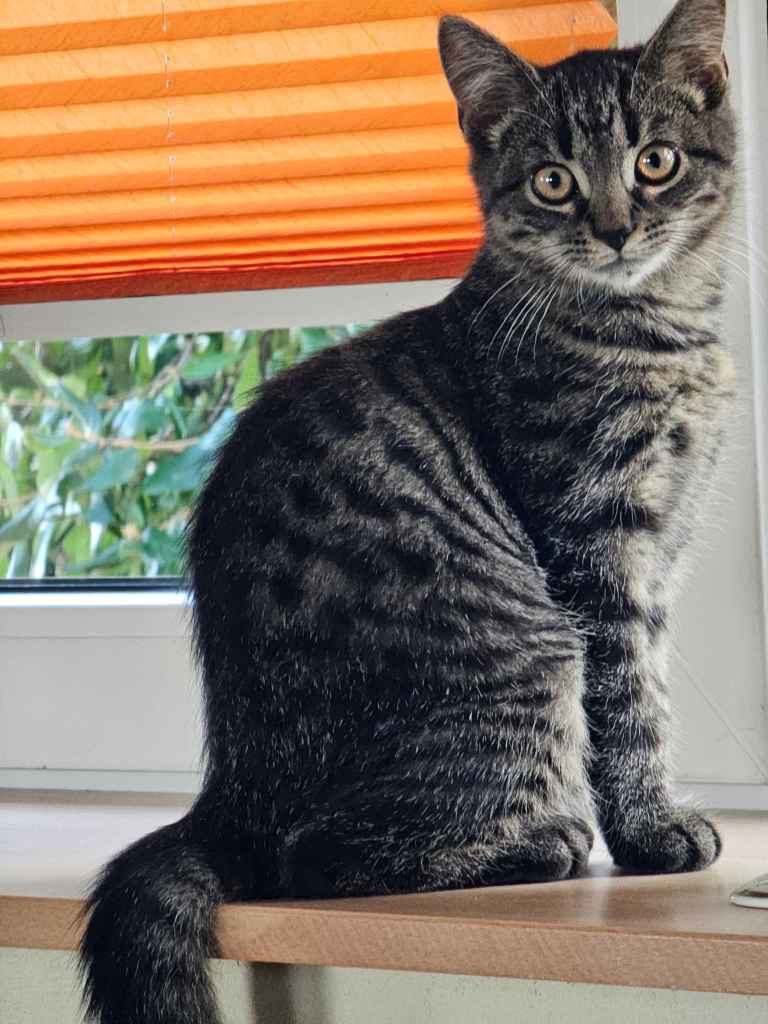
The test subject (F. Catus) was first instructed towards the goal of the experiment: Left for pizza, right for Thai box. These instructions were met by general disinterest and lack of understanding by the test subject. The test subject then was given the choice between two, inadequately protected, socked feet. The feet were always oriented towards the cat, moved in unison and wiggled enticingly.
After the first choice, a deep freeze pizza was prepared in the oven for 12 minutes. During the wait time, the experiment was repeated, abeit now without consequence for the choice of dinner.
The data ends after about 8 minutes due to a lack of interest by the test subject, followed shortly by ingestion of pizza by the author and attempts of fending off said pizza from the test subject.
Data
L R R R R L R L L R L R R L R R R R
Explanation of result
When queried, F. Catus provided the following comment to his actions:
0,olpkß.öüolp`ÜÄÄÄÄÄÄÄÄÄÄÄÄÄÄÄÄÄÄÄÄÄÄÄÄÄÄÄÄÄÄÄÄÄÄÄÄÄÄÄÄÄÄÄÄÄÄÄÄÄÄÄÄÄÄÄÄÄÄÄÄÄÄÄÄÄÄÄÄÄÄÄÄÄÄÄÄÄÄÄÄÄÄÄÄÄÄÄÄÄÄÄÄÄÄÄÄÄÄÄÄÄÄÄÄÄÄÄÄÄÄÄÄÄÄÄÄÄÄÄÄÄÄÄÄÄÄÄÄÄÄÄÄÄÄÄÄÄÄÄÄÄÄÄÄÄÄÄÄÄÄÄÄÄÄÄÄÄÄÄÄÄÄÄÄÄÄÄÄÄÄÄÄÄÄÄÄÄÄÄÄÄÄÄÄÄÄÄÄÄÄÄÄÄÄÄÄÄÄÄÄÄÄÄÄÄÄÄÄÄÄÄÄÄÄÄÄÄÄÄ?Ä
Ä
?
_*00000
Following this comment, he disabled number lock for this keyboard, which surprised the author twofold: For one, because this keyboard does not feature a number lock key, for another, because it also doesn’t feature a number pad for the NumLock to apply to in the first place.
Discussion
F. Catus exhibited a 2/3 bias towards the right foot (R, n=12; L, n=6). This is consistent with literature [Pagé 2003], though in their experiment this bias depended on the setup and cat.
This result implies that, even at an approximately equal distance of both choices, cats may be biased for other reasons – maybe right foot was talking smack. Or they may simply have preferences on which leg to attack first. As such, before taking a cat attack at face value, one must allow for enough attacks to eliminate bias.
In this experiment, assuming the 2/3 bias is true, an easy way to eliminate bias would be to not just look at the first “coin flip”, but rather to average the first several attacks and test whether it ends above or below the 2/3 threshold. This has the additional advantage of providing extra entertainment to the kitty, which is always welcome.
Conclusion
The author probably should have gone for the Thai box for dinner instead.
References
CLARK, Matthew PA; WESTERBERG, Brian D. How random is the toss of a coin?. Cmaj, 2009, 181. Jg., Nr. 12, S. E306-E308.
CUBIDES, Emily; O’BRIEN, Shaun. 2023 Findings from the Diary of Consumer Payment Choice. The Federal Reserve Financial Services, 2023
FORD, Joseph. How random is a coin toss?. Physics Today, 1983, 36. Jg., Nr. 4, S. 40-47.
PAGÉ, Domique Dorais; DUMAS, Claude. Strategy planning in cats (Felis catus) in a progressive elimination task. Journal of comparative psychology, 2003, 117. Jg., Nr. 1, S. 53.
Acknowledgements
Leo Wattenberg would like to acknowledge Findus Catus’ adorableness.
Findus Catus would like to get acknowledged more.

 Leo Wattenberg